
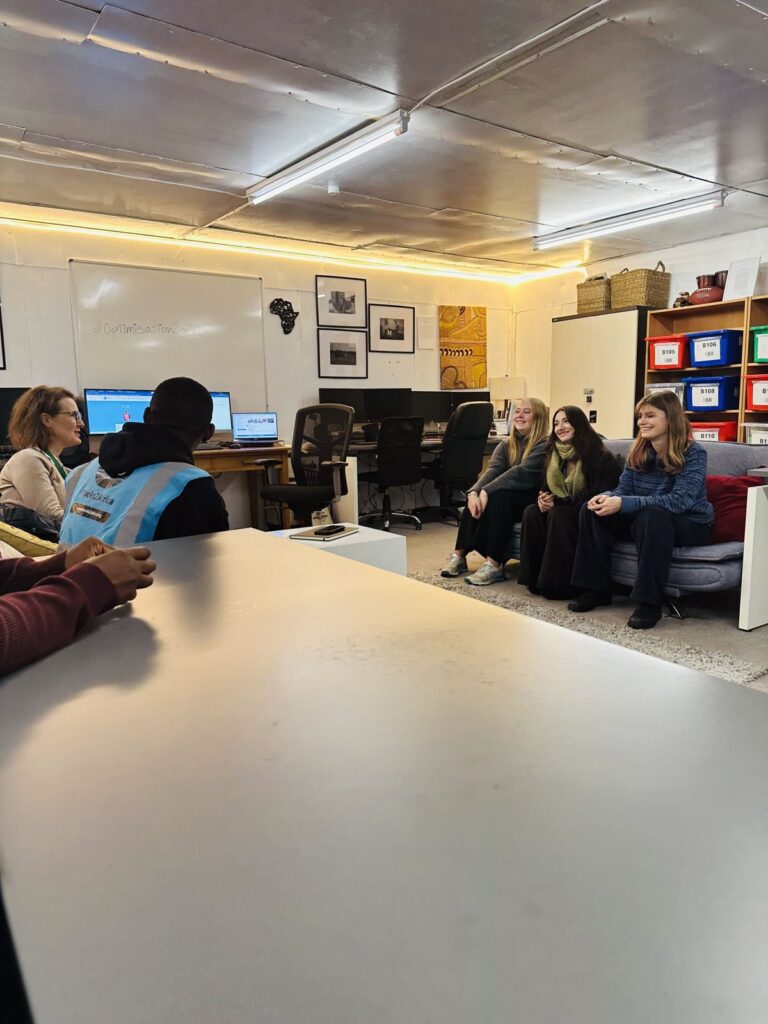
Tonbridge Grammar School (TGS) has raised over £800 for Books2Africa this year, and its librarian came to see where the money and the books go.
Mrs Maloney, TGS librarian and house coordinator, visited us with three Year 12 students, who came along as volunteers. After a walk around our operation, they sat down with our Director of Operations, Dr Tonson Sango, to talk about books, phones and how to fall in love with reading.
Books2Africa is one of the school’s house charities. As Mrs Maloney put it, we were chosen because “you work locally doing something that we felt was important, and it’s obviously close to my heart because I’m the librarian.”
Find a book you can’t put down
Tonson started with the question for the rest of us: how do you get people to read when there’s Netflix, video games and a phone in every pocket?
“The secret for me is finding a book that you can’t stop reading,” said Mrs Maloney. “It needs to be something more compelling than scrolling on your phone. I need to escape into it.”
She was honest that she scrolls too. “I find myself thinking, this isn’t making me happy. Oh, there’s gone another 15 minutes.” Her answer is to put the phone in another room before she sits down with a book.
She also doesn’t believe you have to finish every book. “If I was a stand-up comedian and I said to you, I’ll be funny in ten minutes, just stick with me, you’d leave. An author has the same problem.” If a book hasn’t gripped you after about 50 pages, put it down. “It’s not as if there’s a shortage of books.”
The students agreed. Many people are put off reading by the pressure to finish, or to read the “difficult” books for bragging rights. Sometimes you want a graphic novel. Sometimes you want something simple. “There’s no judgement from me about what you read,” said Mrs Maloney. “You read whatever interests you.”
What they’re reading
Mrs Maloney runs a book club at TGS for parents, staff and former students. Each round has a theme: autobiographies, teen and young adult fiction (“a lot of the parents haven’t read anything their kids were reading”), and novels in translation.
One favourite was Trevor Noah’s Born a Crime, about growing up in apartheid South Africa. “He tells the story of his very hard childhood with such humour and such kindness,” she said. This month the club is reading The Lion Women of Tehran and Entangled Life, a properly scientific book about the fungal networks growing underground.
The students’ tastes were just as varied. One loves teen and YA fiction and recently enjoyed Fourth Wing. Mrs Maloney admitted that one was a “did not finish” for her, which proved her point nicely. Another has been reading articles and wants to start on the classics. A third prefers non-fiction, especially true stories of people who struggled and came through.
So does reading articles count? “Absolutely, all reading counts,” said Mrs Maloney. “Audiobooks count, graphic novels count, reading to your children counts.” What matters is the quality of the writing. A published article has been written by someone with something worth saying and checked by an editor. A long social media thread usually hasn’t, and as one student pointed out, the algorithm tends to feed you more of what you already think.
Over £800 and a pallet of books
This year TGS raised over £800 for Books2Africa through World Book Day and house charity fundraising. That’s a strong result, as we are one of six charities the school supports. The school also donated a pallet of books, and next year there will be many more: TGS has just changed its curriculum, so a large batch of textbooks is on its way to us.
Mrs Maloney also wants the partnership to go further than giving. TGS has a partner school in Nigeria, and she and English teacher Mrs Shaw are working out how the two schools can build a real relationship. “I want our students to understand the real impact of what we’re doing,” she said. “Not just, we’ve given these books and that’s it, but what are they doing, and what is life actually like?”
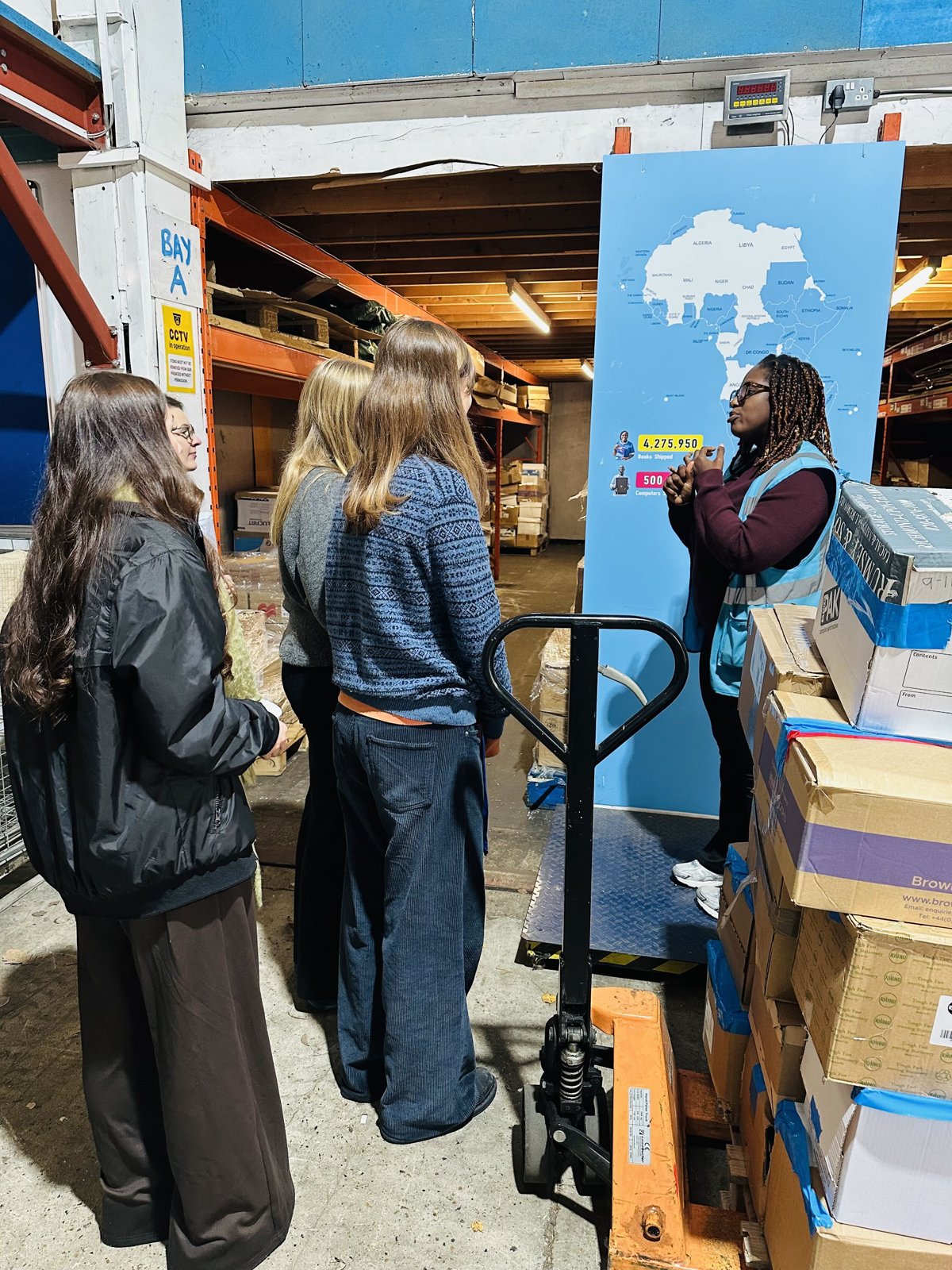
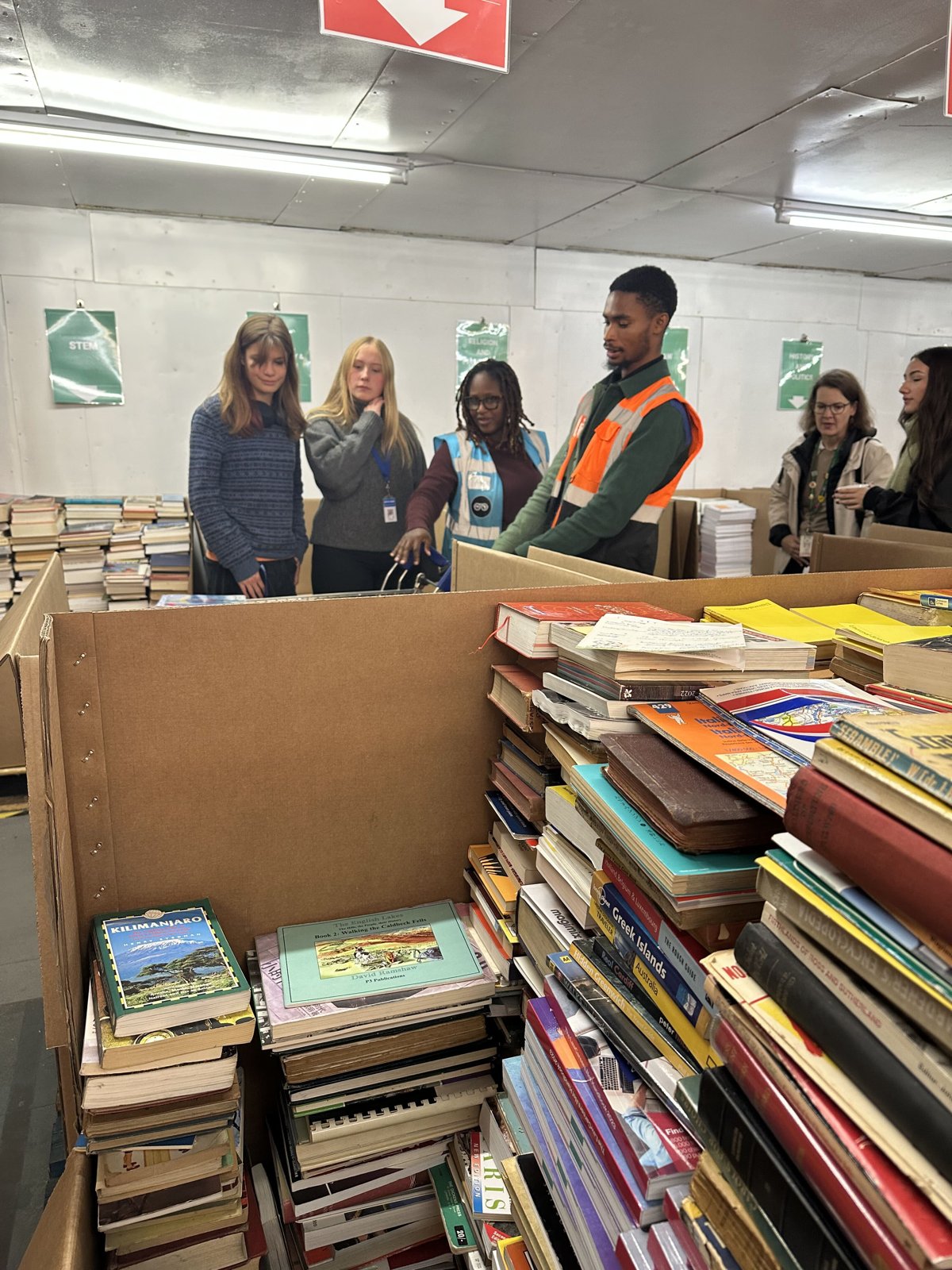
Tonson explained what happens to donated books once they arrive. Around 40,000 books come through our hands every month. Each one is checked and sorted so the right books go to the right place. “We don’t want to send children’s books to a law university,” he said. Then comes the moment that matters most: photos from schools saying the books have arrived, and the reading that follows.
“Some schools have it really rough,” said Tonson. “But if they have a book, then it can happen. If you’ve got a book and a pen, there’s power there.”
Tips for anyone who wants to read more
We asked the TGS team for advice for someone who lives on their phone but would like to read more. Here’s what they said.
- Make it a habit. “Before I go to bed every night I read for half an hour, and I make sure my phone is not in my room.”
- Find the time. Think about how long you spend scrolling. “You could dedicate 20 minutes to reading. It’s not that much, especially when a lot of what you see on social media you don’t remember the next day.”
- Try lots of things. Graphic novels, poetry, articles, biographies. Keep going until you find what you enjoy. Your local library and free e-books make that easy.
- Read a chapter, not a number of minutes. “A chapter will usually end on a cliffhanger. You’ll often find you’ve read two or three, and that’s a better reward than watching the clock.”
- Use audiobooks. Listen while you do other things, or listen and follow along in the printed book. “It’s like holding your hand as you get into the water. Then I’m completely gripped and I can carry on by myself.”
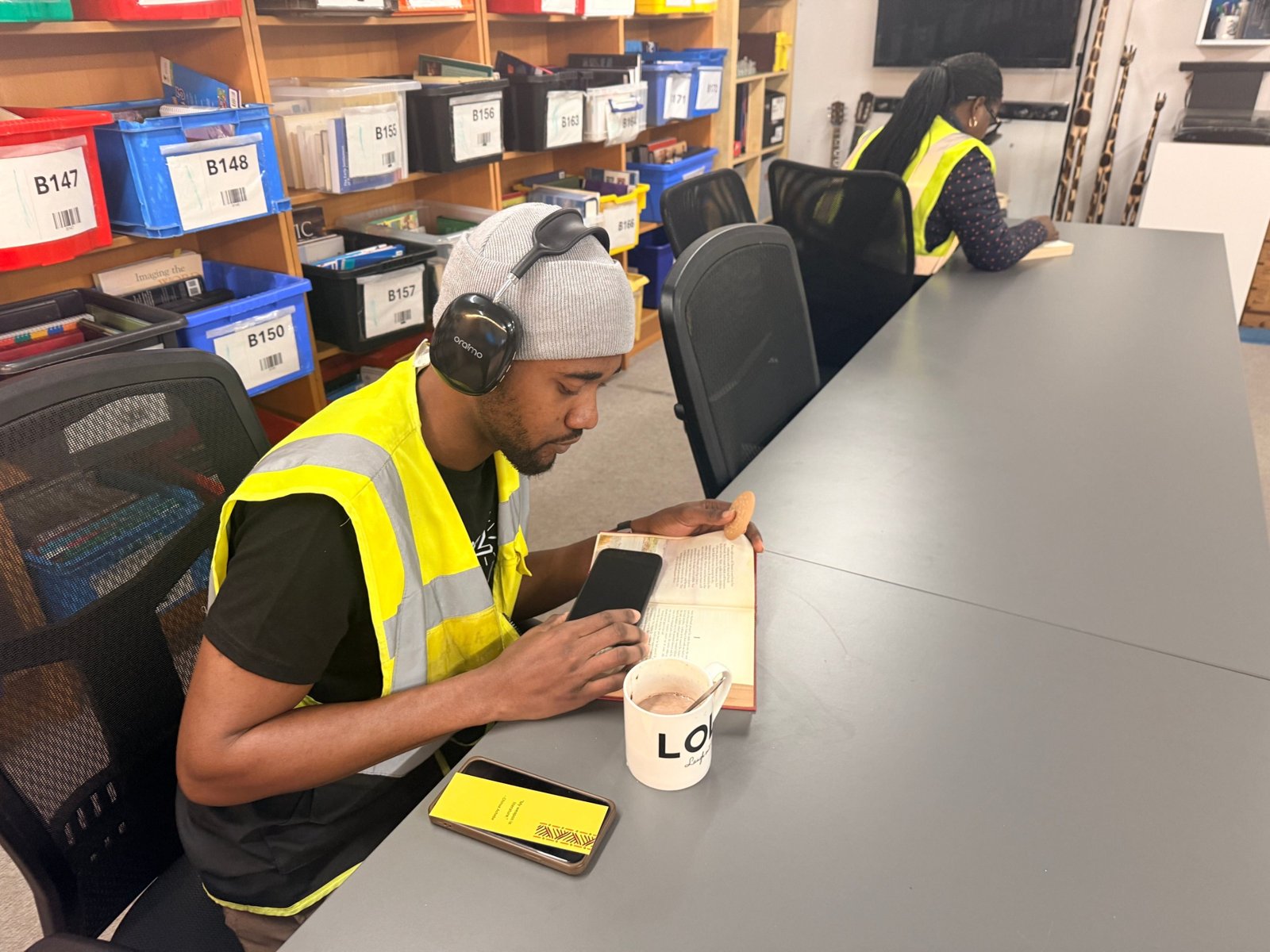
At Books2Africa, our volunteers run their own internal reading challenge, setting aside time on their breaks to read, and the TGS team’s tips will be passed straight on to them.
Thank you, TGS
For the students, the visit put things in perspective. “It’s really put into context just how fortunate we are to have our library,” said one. “We take it for granted that books are so easy to get.”
Mrs Maloney summed up her own role in four words: “I have the best job.”
Thank you to Mrs Maloney, her students and everyone at Tonbridge Grammar School who raised money, packed books and gave their time. We’re grateful for every book and every pound, and we look forward to those textbooks next year.
If your school would like to support Books2Africa, or you have books to donate, find out how at books2africa.org.
Read next: Mrs Maloney’s pick
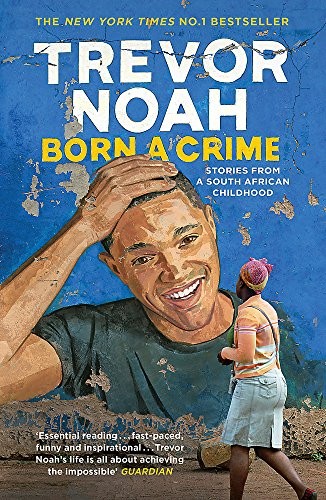
Born a Crime by Trevor Noah
Start with the book club favourite: Born a Crime: Stories from a South African Childhood, a funny, moving memoir of growing up in apartheid South Africa. It’s also a perfect start to Non-Fiction November.
As an Amazon Associate, Books2Africa earns from qualifying purchases. It costs you nothing extra and helps fund our work.